Aging in Place for High-Net-Worth Families: Where Five-Star Service Meets Private Nursing
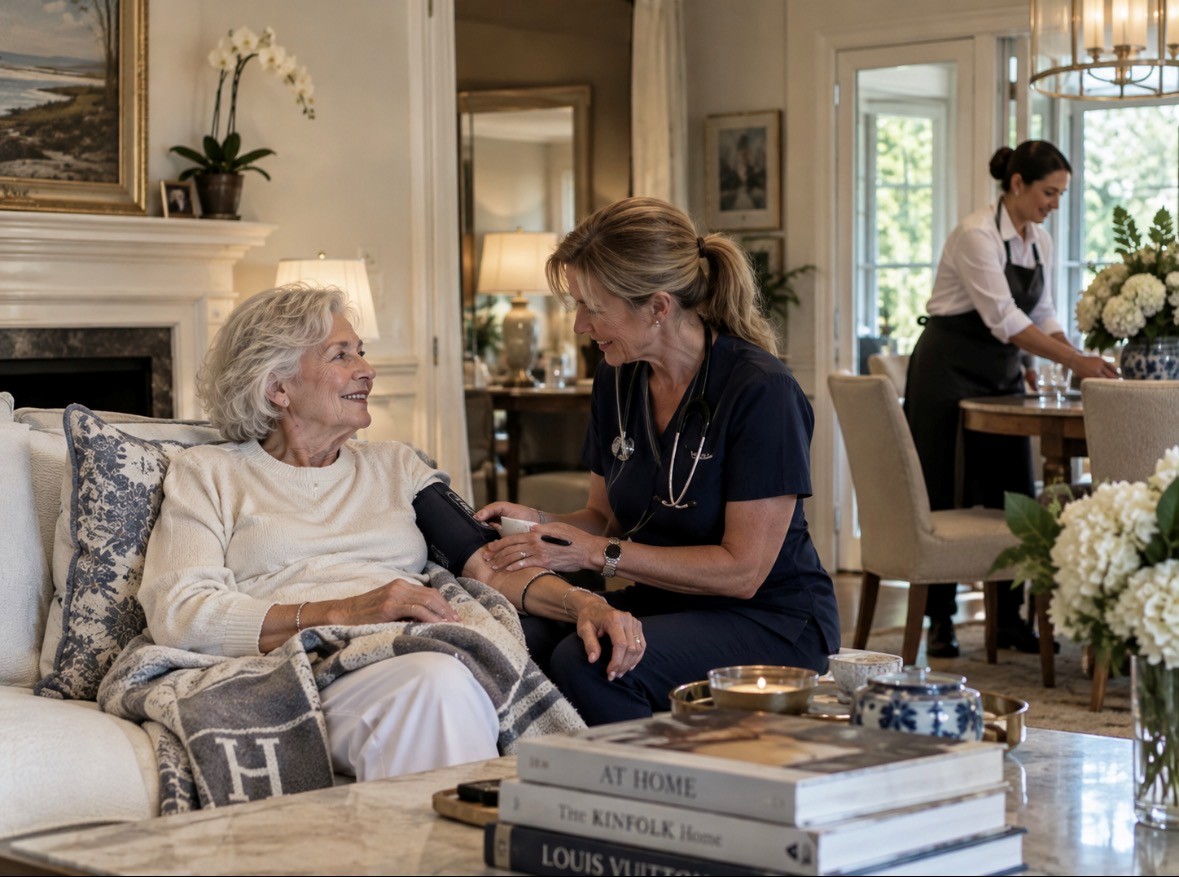
Aging in Place for High-Net-Worth Families: Where Five-Star Service Meets Private Nursing
By Peter O'Donovan, Founder, International Domestic Consulting
For many families, conversations about long-term care eventually turn to a difficult question: Can Mom and Dad safely remain at home?
For affluent families accustomed to privacy, independence and a high level of personal service, the answer is more complex than simply hiring an in-home caregiver.
Successful aging in place means creating a home environment that can adapt to a senior's changing needs while preserving the routines, independence, privacy and quality of life that make the residence feel like home. In a substantial private residence or multi-property estate, accomplishing that often requires two disciplines that have traditionally operated separately: excellent senior care and exceptional private-service hospitality.
At International Domestic Consulting, we believe the best aging-in-place environments bring those two worlds together seamlessly.
What Does Aging in Place Mean for High-Net-Worth Families?
Aging in place is about far more than remaining physically inside one's home. For families accustomed to professionally managed residences , it means adapting the household around the principal rather than expecting the principal to adapt to an institutional environment.
That may involve private nurses or caregivers, an experienced estate manager, private chefs, drivers, personal assistants and other household professionals working together to support the principal while allowing the residence to continue functioning as a home.
When done well, much of that support becomes nearly invisible.
Managing Senior Care Within a Five-Star Private Residence
I experienced this intersection firsthand during nearly 12 years managing a prominent family estate on Sea Island, Georgia.
The principals were in their late 80s and early 90s, and their home was anything but a conventional retirement setting. It was an expansive 15,000-square-foot waterfront Sea Island cottage with 13 bedrooms, 15 bathrooms, 18 fireplaces and three swimming pools.
Despite its scale, it was first and foremost their home and private sanctuary; a location they’d been coming to for decades. At the same time, it was a multigenerational family gathering place. Their children and grandchildren regularly came to Sea Island to relax, entertain guests and host business, philanthropic and social events.
As the principals grew older, my role evolved with them.
I was still responsible for the staff, vendors, property, entertaining and day-to-day operation of a substantial estate. Increasingly, however, I was also coordinating the logistics surrounding their healthcare and changing needs. The household still needed to function at the standard of a five-star private residence while quietly adapting around two aging principals.
How Can Seniors Receive Care Without Making the Home Feel Like a Medical Facility?
One of the greatest advantages of aging in place is familiarity. Seniors remain surrounded by their personal possessions, established routines, loved ones, pets, domestic staff, gardens and memories. Preserving that environment, however, requires considerable coordination behind the scenes.
At the Sea Island estate, which they had resided in for many years, this became part of my everyday responsibility. I coordinated physicians' appointments and medical calendars, arranged non-emergency transportation to and from medical appointments, including the Mayo Clinic in Jacksonville, and made sure the appropriate family members and household staff knew what they needed to know.
As needs changed, the household changed with them.Clinical responsibilities remained with nurses, physicians and other appropriate healthcare professionals. My role as estate manager was different. I needed to make sure all of the household and logistical pieces surrounding that care were coordinated and worked together.
The objective was never to transform their residence into a healthcare facility. We wanted Mr. and Mrs. to receive the support they needed with dignity, while continuing to experience their home as the place they had always known.
The Art of Discreet Care Coordination
One of the things I learned from that experience is that the best aging-in-place management often means making an increasingly complex support system feel unobtrusive and simple to the principal.
Medical appointments can be scheduled around the senior's routines and energy levels. Transportation can be arranged using the most accessible areas of the property. The mode of transportation needs to be considered. For example, we bought a high-end minivan with fold out second row leg rests to make travel more comfortable, rather than use the principals’ luxury cars. Household staff and private chefs can adjust schedules, meals and routines as needs change.
Private nurses and caregivers can communicate important observations to the appropriate family members and healthcare professionals while maintaining the discretion expected within a private household. Medical supplies and equipment can be readily accessible through home care companies without unnecessarily dominating the appearance of the residence.
Much of this work should happen quietly in the background. The senior should remain the principal of the home , not feel like a patient living inside a medical facility.
What Does a Private Nurse or Caregiver Do in a Luxury Household?
Staffing a high-net-worth household for senior care presents a unique challenge. Clinical competency and caregiving experience are essential, but in a sophisticated private residence they may not be sufficient on their own.
A private nurse or caregiver might assist a principal with personal care or health-related needs in the morning and later interact with children, grandchildren, executives, neighbors, household staff or formal dinner guests.
The care professional therefore has to understand two environments simultaneously: caregiving and private service.
For this kind of role, the qualities I often look for in a candidate include:
- Absolute Discretion: Respecting confidentiality, privacy boundaries, household protocols and, where applicable, nondisclosure agreements.
- Calm Communication: Communicating changes or concerns clearly to the appropriate people without unnecessarily alarming the principal, family or household.
- Situational Awareness: Understanding when the principal needs assistance and when to step quietly into the background.
- Household Collaboration: Working effectively with estate managers, housekeepers, private chefs, drivers and other long-term domestic staff.
- Respect for Independence: Providing assistance without unnecessarily taking control away from the principal.
- Hospitality Instincts: Understanding the service expectations and discretion required within a sophisticated private residence.
The ideal private-care professional combines genuine compassion and excellent caregiving skills with the instincts of an experienced private-service professional. That combination can be difficult to find, and extraordinarily valuable when found.
What Does Five-Star Service Mean for an Aging Principal?
In a luxury hotel, five-star service might mean remembering a guest's favorite drink, preferred pillow or breakfast order. For an aging principal, anticipation becomes far more consequential. It may mean noticing a subtle change in appetite, mobility or daily routine and appropriately communicating that observation. It may mean ensuring necessary equipment is readily accessible without allowing it to dominate a beautifully designed room. It can mean adjusting meals to accommodate changing dietary needs without making the principal feel that every meal has become a medical exercise.
During my years on Sea Island, I also learned how important it was to preserve the traditions of the household as the principals aged. Their changing needs did not mean that family life had to stop around them. As Mrs.’s vision worsened, I hired a makeup artist and hairdresser that would come in before events to help get her ready.
Family gatherings should still feel like family gatherings. When children and grandchildren arrive, the estate should remain the warm family home they have always known.
Social entertaining should remain social. When friends gather for dinner, the evening should center on conversation and connection rather than medical routines.
Business entertaining should remain professional. If meetings or events are held at the residence, necessary care can continue discreetly in the background.
What Is the Estate Manager's Role in Aging in Place?
As principals age, the responsibilities of an experienced estate or household manager often evolve. Traditional responsibilities such as household staffing, vendor relationships, property maintenance, security, travel coordination and event planning remain important. But another responsibility increasingly emerges…care coordination.
Over time, I became an operational link connecting the principals, family, household staff and care team. That meant maintaining calendars, coordinating transportation, communicating schedule changes, making sure the appropriate staff were available and adapting household routines as circumstances changed.
An estate manager is not a substitute for a physician, nurse or other licensed healthcare professional. Rather, an experienced estate manager can create the operational structure that allows those professionals to do their jobs effectively within the husehold When managed correctly, care coordination does not feel like a separate clinical operation. It becomes an integrated extension of everyday estate management.
How Can Families Preserve Independence, Privacy and Dignity While Aging at Home?
The ultimate objective of aging in place is not merely keeping someone inside their house. It is preserving as much independence, dignity , privacy and normalcy as possible. For a senior who has spent decades building a home, maintaining traditions and living independently, those things matter. Senior care and luxury household management do not need to compete. Done properly, they reinforce one another.
In my experience, the best aging-in-place households don't feel like care environments. They feel like well-run homes in which the right support quietly exists in the background. A well-managed household can adapt as the principal's needs change without allowing those needs to define every aspect of daily life. That is one of the greatest advantages of thoughtfully planned aging in place.
How Do You Build a Private Aging-in-Place Care Team?
There is rarely a single person who can appropriately handle every aspect of aging in place, particularly in a large or complex private residence.
Depending on the family's needs, a private aging-in-place team may include:
- Private-Duty Nurses and Caregivers
Clinical support, personal care, companionship and assistance with activities of daily living, according to their qualifications and scope of practice. - Estate or Household Managers
Care coordination, staff management, scheduling, household operations, vendor oversight and communication among the different parts of the household. - Private Chefs
High-quality meals adapted to the principal's preferences, nutritional objectives and any dietary guidance provided by appropriate healthcare professionals. - Drivers and Personal Assistants
Safe transportation, appointment scheduling, errands, personal logistics and day-to-day support. - Housekeepers and Other Domestic Staff
Maintaining the residence at the standard the principal expects while adapting routines as mobility, accessibility or care requirements change.
The right structure will be different for every family.What matters is that the people supporting the principal function as a cohesive household team rather than as disconnected service providers.
Private Household Staffing for Families Aging in Place
At International Domestic Consulting, we specialize in recruiting and placing exceptional, pre-vetted household professionals for discerning families throughout the United States and internationally. Our work includes estate and household managers, private housekeepers, domestic couples, private chefs, nannies, caregivers and other private-service professionals.
For families considering aging in place, the staffing requirement can be particularly nuanced. A candidate may have excellent technical qualifications yet lack experience working within a sophisticated private household. Conversely, an excellent hospitality professional may not possess the caregiving background required for a particular position.
Finding the right person requires understanding both sides of the equation. My years managing my senior principals gave me firsthand experience with what that intersection looks like in practice. It involves far more than filling a position. It means understanding how care, hospitality, household operations, privacy and family life have to function together.
That experience continues to influence how we approach aging-in-place staffing at International Domestic Consulting today.
Frequently Asked Questions About Private Aging-in-Place Staffing
What is aging in place?
Aging in place generally refers to an older adult remaining in their own home as their needs change rather than moving to an institutional or residential care setting. Successful aging in place may require modifications to the home, assistance with daily activities, healthcare services and additional household support depending on the individual's circumstances.
Can a private nurse provide care in someone's home?
Private-duty nurses can provide nursing services in a private residence within the scope permitted by their professional licensing and applicable state law. The appropriate level of nursing or caregiving support depends on the individual's medical and personal-care needs.
What is the difference between a private nurse and a caregiver?
A private nurse is a licensed healthcare professional whose responsibilities can include clinical nursing services within their permitted scope of practice. A caregiver may provide companionship, personal assistance and support with activities of daily living, but the services that can be performed depend on the caregiver's qualifications and applicable state regulations.
Why would a family need an estate manager as well as a caregiver?
The positions serve different purposes. Nurses and caregivers primarily focus on the individual receiving care. An estate manager oversees the broader operation of the residence and staff. In a complex household, the estate manager can coordinate schedules, transportation, vendors, domestic staff and other logistics so the care team can focus on the principal.
What should a family look for when hiring a private caregiver for a high-net-worth household?
In addition to appropriate qualifications and caregiving experience, families should consider discretion, professional references, background screening, communication skills, experience working in private residences and the candidate's ability to collaborate with existing household staff.
Can private chefs be part of an aging-in-place team?
Yes. A private chef can help maintain the quality and enjoyment of meals while adapting menus to the principal's preferences and any dietary guidance provided by healthcare professionals. For many seniors, maintaining familiar meals and dining routines can also help preserve an important part of everyday life.
Creating the Right Environment at Home
For families considering aging in place, planning should begin before a crisis forces decisions to be made quickly. The right combination of professional care and experienced household staff can allow a residence to evolve with its principal while preserving what matters most: independence, privacy, dignity and the feeling of being at home.
At International Domestic Consulting, our role is to help families identify and recruit the private-service professionals needed to support a safe, discreet and exceptionally well-managed home environment.
To discuss private household staffing for an aging principal or family member, contact International Domestic Consulting for a confidential conversation about your family's needs.
About Peter O’Donovan. Peter runs International Domestic Consulting and has more than three decades of experience in private service, luxury estate management, hospitality and domestic staffing. His career has included managing complex, multi-property households for prominent families, directing large household staffs, and coordinating private entertaining, travel and senior-care needs. A formally trained hospitality professional and former private chef, Peter has worked throughout the United States and internationally, bringing a rare combination of hands-on household experience and recruiting expertise to IDC. Today, he personally applies that experience to helping high-net-worth families identify and retain exceptional private-service professionals.